A rainy week on a longer stay: build an ordinary day you would still enjoy
A practical longer-stay guide testing the accommodation, nearby options and small projects against an ordinary week of poor weather.

A wet afternoon during a city break can be filled with a museum. A wet week during a month away raises a different question: do you still like being there when the postcard version of the place is unavailable?
You do not need seven emergency attractions. You need a base and a few ordinary options that let the week remain comfortable. Planning those before booking can change which apartment, neighborhood and season make sense.
Test an indoor day before choosing the base
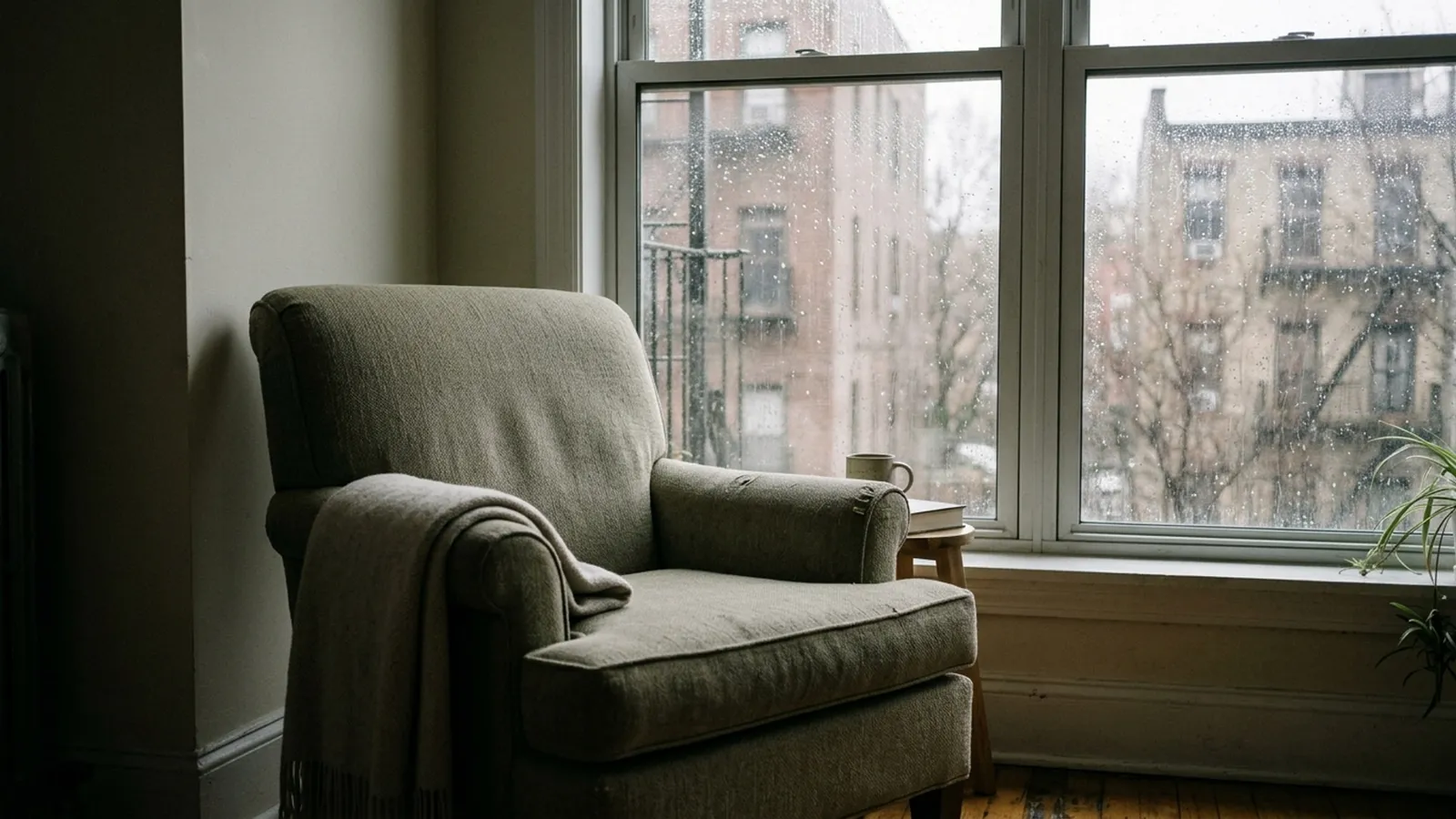
Imagine waking up to rain and deciding to stay close to home until lunch. Where would you read, make food, take a call or work on a small project? Is there a comfortable place to sit apart from the bed?
Look for evidence in the listing and ask precise questions where it is unclear. A table visible in a photograph may be a small decorative surface rather than somewhere you would use for an hour.
If two people are traveling, consider whether they can enjoy different quiet activities without each person disturbing the other. A beautiful sleeping space can be a poor all-day living space.
Create three kinds of alternative
Choose one thing you can do in the accommodation, one manageable outing nearby and one larger indoor visit that you genuinely want. A book, a local café and a museum can be enough; the exact choices belong to your interests and budget.
Check operating information before the day you need it. A venue being indoors does not mean it is open every day, uncrowded or reachable comfortably in bad weather.
Do not reserve every alternative in advance merely to feel prepared. Leave flexibility where the conditions and ticket rules allow it, especially if the whole point is to respond to how the week feels.
Keep food and movement workable
An apartment kitchen can make a wet day easier if buying groceries and using it are realistic. Think about the nearest ordinary food options and the journey back with a bag, rather than only the restaurant you want for a special evening.
For movement, choose what fits you and the conditions. An indoor activity, a short permitted walk in a suitable break in the weather or a quieter day may each be reasonable. There is no need to turn the week into a test of persistence.
Use current local weather and travel information for the actual day. A planning article cannot establish that a coastal path, road or transport service is safe or operating during a particular event.
Give the week a small purpose
A modest project can make time indoors feel chosen. Read part of a book connected with the place, sort a few travel photographs or practice something you came to learn.
Make the project small enough to finish without creating a new full-time obligation. “Write a page about one detail I noticed” is more inviting than “document the entire trip before leaving.”
If you have a class booked, keep its access and cancellation arrangements alongside the plan. A weekly anchor can help without making attendance compulsory when conditions change.

Leave some room in the budget
Imagine a hypothetical week with two extra indoor outings at $18 each and $24 of additional local transport. That is $60 beyond the ordinary plan. If those choices replace rather than supplement other spending, adjust the comparison accordingly.
The point is to include a little realistic flexibility, not to predict a city’s weather or publish a universal rainy-day allowance.
An inexpensive apartment can become less economical if every uncomfortable afternoon requires paid space elsewhere. Compare a more usable base with that actual alternative.
Decide what the week tells you
Afterwards, note what worked: the reading chair, the nearby shop, the activity you enjoyed or the point at which you wanted more space. Use that to improve the next stay.
A longer visit includes ordinary weather and ordinary energy levels. If the place still works during an unremarkable indoor day, you have learned something more useful than whether it looks good in sunshine.
Further reading
For another useful planning exercise, imagine an ordinary shopping day, an afternoon when you want to be alone and a day when nothing is booked. A base that supports those days may serve the whole month better than one chosen only for its best view.
Continue planning
Choose a place to live for a month, not just a room to sleep in. Choose the base for ordinary living, including time spent inside, rather than only for sleeping.
Use a local class to give a longer stay some structure. An introductory local class can supply a weekly anchor without filling every day.
Leave some days empty: choose a travel pace you want to repeat. Leave some options unbooked so the week can respond to conditions and energy.