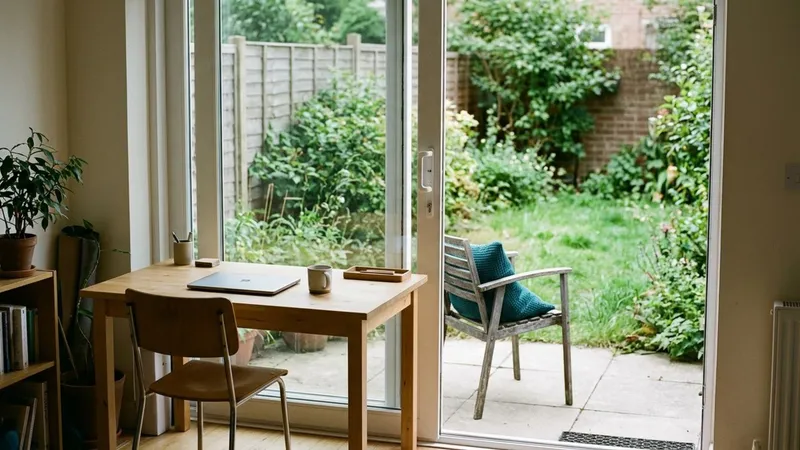
You do not need to cross an ocean to discover whether you enjoy staying in one place without a packed itinerary. A nearer trial can answer useful questions while keeping the journey and arrangements more manageable.
You have pictured leaving work, then find yourself uneasy when the possibility becomes real. It might be money. It might be losing a familiar role, disappointing someone, or having to explain how you spend your days.
Compare working fewer hours, taking a trial break and stopping work, then choose a small experiment that answers a real question about retirement.
Updated
Retirement is rarely one decision on one date. This hub is for the choices around it: when to start, whether to stop completely or step down gradually, how to test a change before committing, and how to talk it through with the people it affects.
Full-time, part-time or a trial run: which degree of change fits your obligations and appetite for risk?
“One more year”: how to make the trade-off explicit instead of drifting into it.
Fear, identity and burnout: how to separate personal feelings from the practical decision.
How to run a reversible test, such as a month away or a reduced schedule, before you commit.
Try this first
Write down one decision you’re weighing and the one constraint that matters most (a person, a date, a contract, a health question). Keep out anything that identifies you. That pairing is the starting point for the first RESTED guides and, once the community opens, the most useful thing to bring to a discussion.
The gradual-retirement guide above is a starting point for comparing options. Nothing here is a recommendation about your own timing; for that, talk to a qualified adviser who knows your situation.