Before a longer stay: what to keep, store, lend or leave behind
Sort possessions around a longer stay without turning one trip into a rushed permanent clear-out.

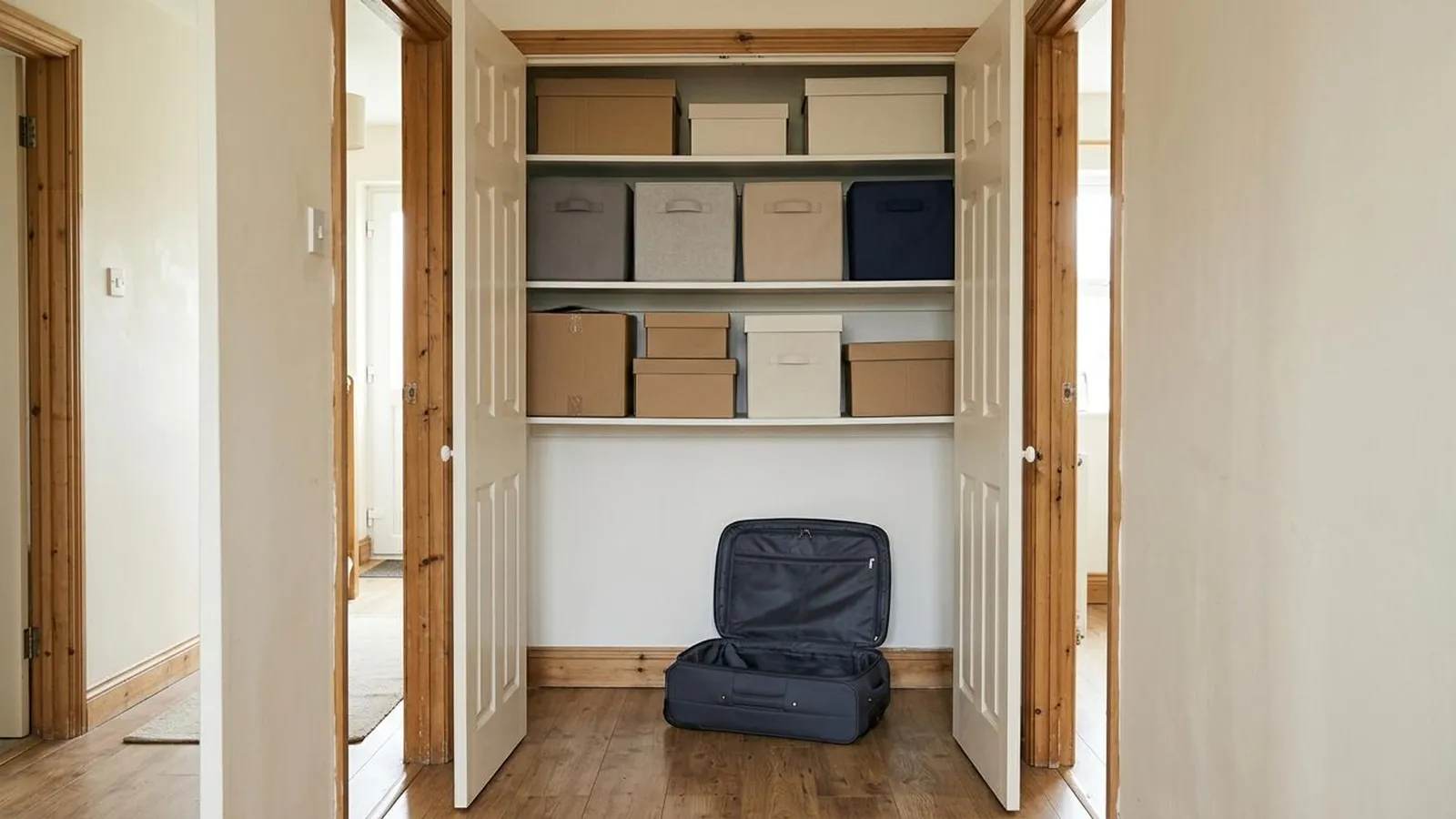
Preparing for a long stay can make every cupboard look like a decision you should already have made. Resist the temptation to turn a temporary trip into an urgent verdict on everything you own.
Separate the travel deadline from the larger question of how you want to live. You can make the house manageable now and leave irreversible decisions for a calmer time.
Use four destinations, with a review date
Choose a small area and sort it into four practical groups: keep accessible at home, store safely, lend with an agreement, and let go. Add a fifth temporary group for decisions you are not ready to make.
That last group needs a review date, not an indefinite claim on your attention. The point is to postpone a decision deliberately rather than repeatedly handling the same object while trying to pack.
For example, a fictional traveller might store winter clothing for a three-month absence, lend a rarely used tool with a return date, and defer decisions about family photographs. Those are choices about one person’s trip, not a universal order for clearing a home.
Separate documents from ordinary belongings
Do not put identity documents, property records, insurance information and sentimental originals through the same quick sorting process as spare kitchenware. Work out what must remain accessible, who may need it and how it will be protected.
The US State Department’s travel checklist recommends making copies of travel documents and leaving a copy with a trusted person. Copies do not replace whatever originals a destination or provider requires. Official travel checklist.
Avoid creating one openly shared folder containing everything important. Decide who needs which information, and keep access no broader than necessary. For account access and communications, use RESTED’s phone, mail and account guide.

Price storage against the plan you actually have
Record the full commitment: transport to storage, the storage charge, access arrangements and getting things home again. Do not assume you will retrieve belongings immediately on return if your next home or travel dates are uncertain.
Compare that cost with the value of keeping the items, including their usefulness and personal importance. Replacement price alone does not capture either, but paying repeatedly to avoid a decision is worth noticing.
Before lending something, agree who has it, what ordinary use is permitted and when it comes back. If damage would seriously harm the relationship, consider a different arrangement. This guide does not settle insurance or legal responsibility; those need the applicable terms.
Leave a usable home, not just fewer things
Make a simple list of where important items are, what a trusted helper may need and which spaces should remain undisturbed. Keep private information out of any general house-care sheet.
Pair this with the empty-home care plan. Reducing possessions and looking after a home are related tasks, but neither substitutes for the other.
When the bags are packed, stop. You are allowed to take a longer trip without completing a lifetime of decluttering first.