Pack for the week you will live, not a different outfit for every day
Packing for a month can feel like preparing for every possible version of yourself. You might want clothes for walking, meals out, exercise, cooler evenings and an event that is not actually planned.

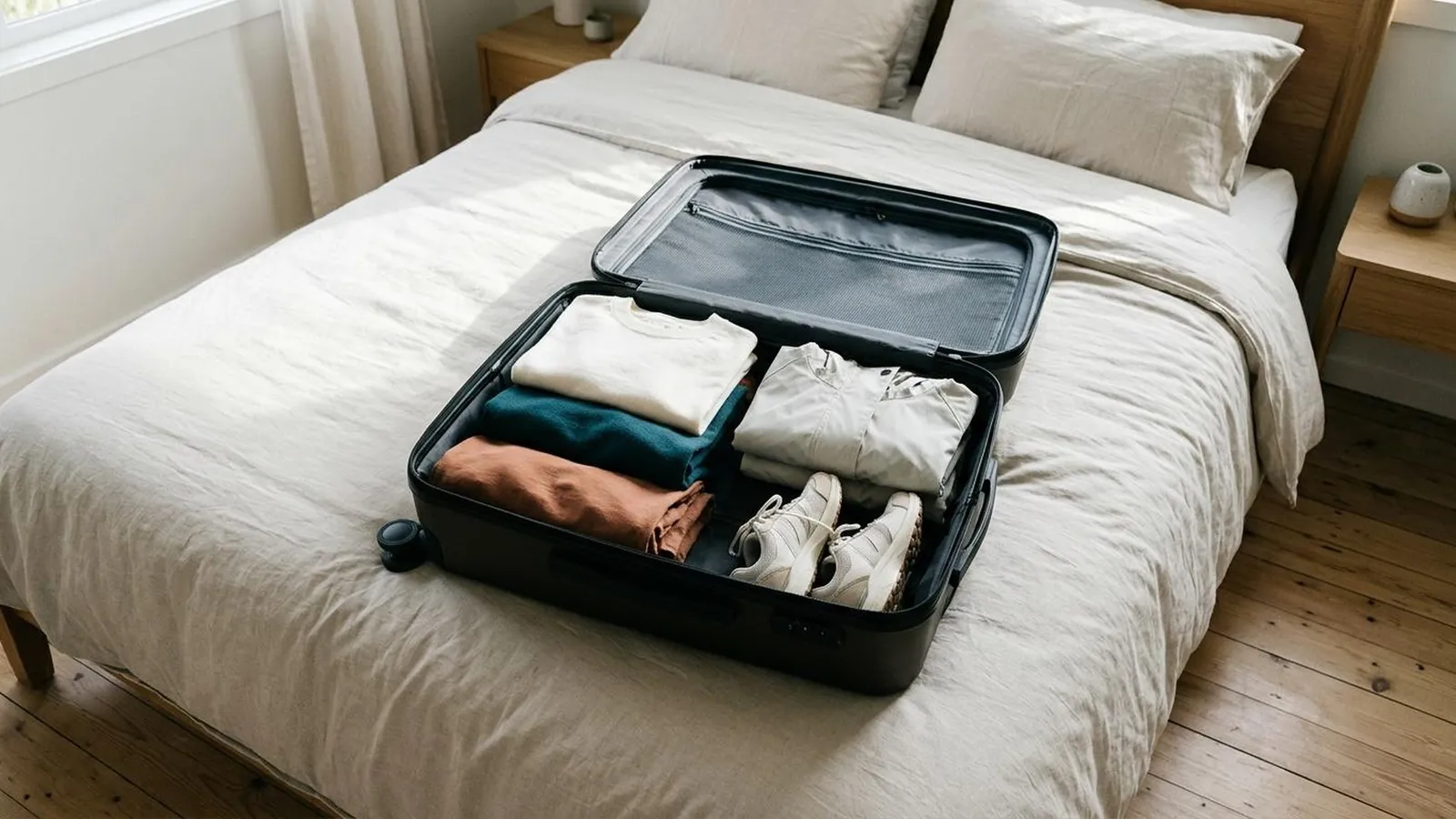
Packing for a month can feel like preparing for every possible version of yourself. You might want clothes for walking, meals out, exercise, cooler evenings and an event that is not actually planned.
Start with the week you expect to live. Then check what can be washed, obtained or reasonably left out. This is a planning exercise, not a universal luggage allowance or a prescription for how little everyone should carry.
Write the actual activities first
List the ordinary activities the stay is built around. Include travelling to the destination, shopping, cooking, walking, resting indoors and any specific outing already booked. Add the weather conditions you need to research for the destination and season.
Use that list to choose items. Something required for an actual activity deserves a different place from something packed because you might become interested in a new hobby once there.
If two travellers share a bag, discuss what each person needs independently. One person’s idea of minimal packing should not silently become a restriction on the other.
Confirm the laundry arrangement
A listing mentioning laundry is not yet a complete plan. Find out whether there is a machine in the property, a shared facility or an outside service, and what using it involves. Ask about drying arrangements as well as washing.
Suppose a hypothetical traveller plans to repeat a week’s clothing during a month away. That depends on a workable washing and drying routine. If laundry requires a substantial trip or takes longer than expected, the packing assumption may need adjusting.
There is no single correct number of garments. The useful question is whether you can explain how the clothing you bring will serve the actual stay without relying on an unconfirmed facility.

Separate essential access from replaceable convenience
Make a short list of things whose absence could disrupt the trip: necessary documents, essential equipment and personal items that cannot simply be replaced on arrival. Check their applicable carrying, destination and transport requirements through the relevant official sources or providers.
Medication needs deserve specific planning with the appropriate professionals and destination guidance. Do not assume a familiar prescription can be obtained abroad, that a quantity is permitted, or that storage arrangements are adequate. This guide does not supply medicine-import or medical advice.
For devices, check the actual equipment, power and connectivity requirements. Use the account-access guide to separate carrying a phone from being able to recover essential access if it stops working.
Test the bag before committing to it
Pack the proposed load and try the ordinary movements the journey involves: lifting it safely where needed, moving it through a doorway and carrying the items you expect to keep with you. Do not turn this into a strength test; choose arrangements that fit your abilities and actual assistance plans.
Read each carrier’s current baggage conditions for the fare and itinerary you intend to use. Check relevant connecting transport too. A bag accepted on a previous journey is not evidence of the conditions on this one.
If extra baggage changes the price, include it in the complete journey comparison. Paying for luggage you genuinely need can be reasonable; discovering an omitted charge after choosing a supposedly cheaper option is less useful.
Make deliberate space for ordinary comforts
You may want a favourite small item, a book or something for an activity you actually enjoy. A packing plan does not need to eliminate every comfort to be successful.
Choose those items knowingly. Compare their space and weight with the value they bring to the stay. Ask whether a bulky item supports an important part of your week or is only there because it was available at home.
Keep purchases you expect to make at the destination visible in the budget. Leaving something out does not make its replacement free, and local availability is a question to check when it matters.
Bring home a better list
During the stay, note what you used repeatedly, what was awkward and what remained untouched. Also record anything you wished you had brought. Avoid rewriting the list entirely after one unusual day.
Use the longer-stay review to connect packing lessons with the accommodation and activities. The next bag should reflect the life you learned you enjoy, with the essential requirements checked again for that particular journey.